Javier Abellán Álvaro joined Masía el Carmen at 26 as an agricultural engineer and never looked back. Across 400 hectares in Valencia, he is building the evidence that regenerative agriculture can withstand commercial pressure, institutional challenges, and the growing force of climate extremes.
Farm facts
Farm located in
Spain

Hectares
400
Time invested
1-5 years
Team size
76-100
Crops
Legumes (Peas/ Beans/ Lentils/ Chickpeas), Root Crops (Potatoes/ Beets/ Carrots/ Other Roots), Vegetables (Open Field/ Market Garden), Fruits, Nuts, Grapes / Vineyards, Olive groves, Perennial Crops (Asparagus/ Arichoke/ Rhubarb..), Herbs/ Spices/ Medicinal Plants
Animals
Bees, Chickens, Horses, Sheep
Distribution channels
Online shop / website, Online marketplace/ platform
Practices
Minimising soil disturbance (no or reduced tilling), Cover cropping, Agroforestry/ Reforestation/ Rewilding, Holistic grazing, Livestock integration, Composting, Rotational crop management, Others
Certifications
Organic
Regenerative Journey
Free of chemical/ synthetic inputs
Revenue streams
Big Dreams from Early Days
An agricultural engineer by training, Javier Abellán Álvaro grew up in Valencia, one of the key farming regions in Europe, where the sun-drenched plains between the mountains and the Mediterranean have fed the continent for centuries. Agriculture here is the economy, the culture, and for many families, the identity. This is where you will find Masía el Carmen, which spans 400 hectares across six farms and produces citrus, olives, almonds, vineyards, and market vegetables that reach consumers across Europe directly from the tree to the door.
Masía el Carmen was looking for someone to lead their regenerative transition in practice. A trained agronomist, Javier’s profile was a natural fit: young, scientifically trained, and genuinely motivated by the challenge of making regeneration work at real scale. At 26, he joined not as a founder or an heir, but as a professional hired to turn ambition into results across 400 hectares, six farms, and a team of over 80 people.
"I was always drawn to a different way of doing things," Javier says, walking the perimeter of one of the citrus groves in the early morning light. "Less extractive, more honest about what the land needs in return. For me, regenerative agriculture was never a trend to follow. It was the only approach that made scientific sense. I think they chose me because I wasn't afraid of the complexity," he says with a grin.
Sunny Fields, Sunny Fruits
Masía el Carmen has its roots in a family operation that dates back generations. The farm was taken over by Gabriel and Gonzalo Úrculo, two brothers who inherited the farm from their grandfather.
For many years, the farm was managed using conventional inputs. When the brothers took the reins, they changed direction. The farm pursued organic certification and committed to building a business model that connected consumers directly to the land through the Naranjas del Carmen adoption platform where customers from across Europe adopt a tree and receive their harvest delivered to their door. This builds a direct relationship with the people who tend to the land. The intention was clear: a farming operation that was productive, transparent, and ecologically responsible.
"The adoption model changes the customer relationship completely," Javier says. "Since the trees are adopted by those who will consume their fruit, we feel a strong responsibility to manage them well and keep them informed and connected to what's going on on the farm."
The most visible regenerative results have come on the farms that started from the most degraded land. "At Verger de Alicia in Llíria, formerly managed conventionally, just three years of managing the land regeneratively has produced a remarkable recovery in ground cover species diversity," Javier explains. "More plant variety has brought more insects, and more insects have made the crops more resilient to pests, removing any need for pesticides."
The Moment It Clicked
In October 2024, the region was struck by the DANA, the worst rainfall in living memory, which made international headlines for the devastation it caused across Valencia. At Masía el Carmen, soil stayed where it should, and water was absorbed into the ground rather than sweeping across it.
"It was crazy to see the power that a resilient farm can have in the face of climate extremes," Javier says. On certain conventional farms, the land served as a clean surface for the water to gather speed and force while our farm acted as a strong barrier, absorbing water, slowing the flow, and ultimately bouncing back much more quickly. It really made me realize the value of what we do. We didn’t just save this year’s crop. We also saved the land for the next generation of farmers who will inherit this.
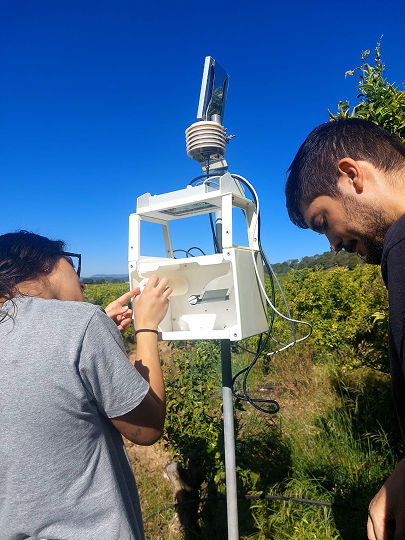
For a young agronomist who had spent years making the scientific case for regenerative practice, seeing it hold under that kind of pressure was something different altogether. Masía el Carmen participates in regular MRV (Measurement, Reporting, and Verification) projects to build hard evidence for the benefits of regeneration, and collaborates with public and private research institutions. Javier believes that robust measurement is what will eventually force a rethink of how public funding flows to farming.
“No one farm is going to change agriculture,” Javier remarks. “We are happy to be part of Top 50 Farmers because collaboration, knowledge exchange, and education with other farmers is invaluable. Exchanging practical experiences, both successes and challenges, sparks new ideas and builds a supportive community that drives regenerative agriculture forward. That’s why I wanted to be a part of this network."
Javier doesn't just want to run a successful regenerative operation. He wants to demonstrate to public institutions, to fellow farmers, and to the consumers eating Valencian oranges at their kitchen tables in Paris or Berlin, that this is the direction worth heading in.
That instinct is what makes Javier Abellán Álvaro a farmer to watch.
Written by Top 50 Farmers and Emilia Aguirre
Their story
The farm