
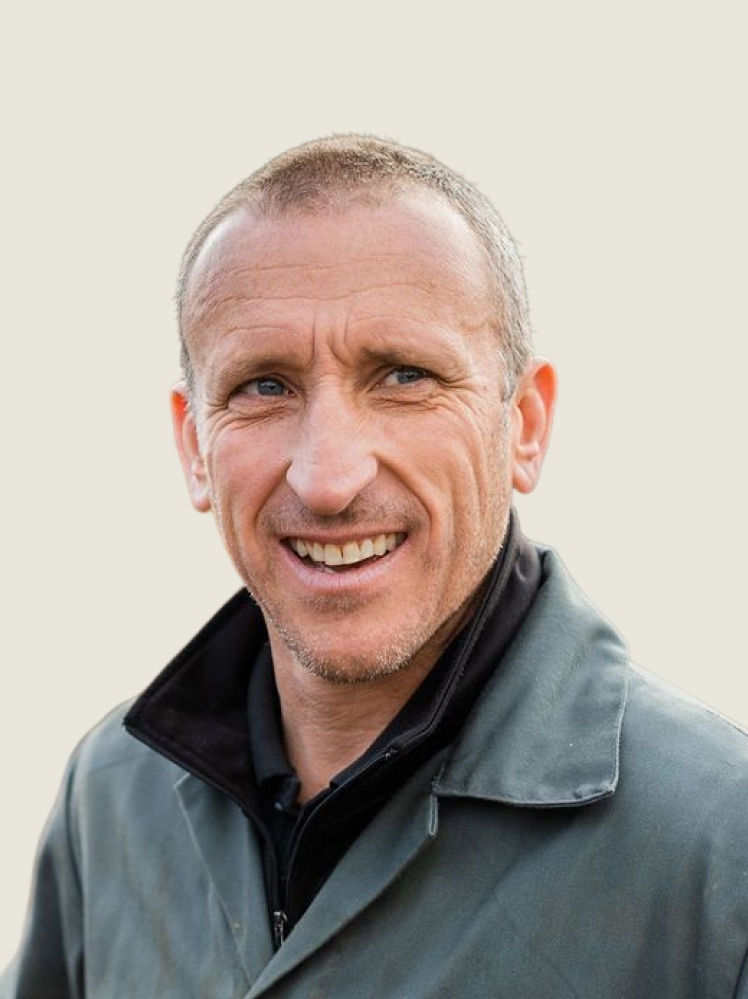

Luke Hasell transformed The Story Farms in Chew Valley into an organic, multi-layered ecosystem. By beautifully interweaving regenerative agriculture with cultural events, he pioneered a powerful community movement anchored in a 1,000-year vision for long-term planetary healing.
Farm facts
Farm located in
United Kingdom

Hectares
125
Time invested
21+ years
Team size
1-5
Crops
Cereals/Grains, Legumes (Peas/ Beans/ Lentils/ Chickpeas)
Animals
Cattle, Pigs
Distribution channels
Direct to retailer, Direct to restaurants, CSA, Online shop / website, Online marketplace/ platform
Practices
Minimising soil disturbance (no or reduced tilling), Cover cropping, Agroforestry/ Reforestation/ Rewilding, Holistic grazing, Livestock integration, Composting, Rotational crop management
Certifications
Organic, Regenerative Organic, Pasture For Life
Regenerative Journey
Free of chemical/ synthetic inputs
Revenue streams
A Farm as a Home, Sanctuary, and Place of Celebration
Located in Somerset’s Chew Valley in the United Kingdom, The Story Farms is a 125-hectare farm operating entirely under regenerative management. Luke Hasell’s dream is to create a regenerative farming foundation that stewards not just a few acres, but millions. The Story Farms is a catalyst for this 1,000 year vision serving as a vibrant sanctuary for inspiration, celebration, and education to inspire a collective awakening around land stewardship.
The 1,000 year future vision stands in contrast to the farm's deeply industrial past, which dates back to the early 1900s. The landscape shifted dramatically when the government purchased Chew Valley land to support the water needs of Bristol and Bath. Following the reservoir's creation, the remaining ground was subjected to decades of intensive, conventional agricultural production.
In 2003, Luke inherited the family land after his father suddenly passed away. At the time, he was working as a civil engineer in London. Rather than continuing the conventional model, he committed to take over the farm and chart a new path. As Luke tells, “I immediately knew that I would transition the farm to organic, beginning a rebuilding exercise to farm with nature and a story that would be shared with thousands of people.” This is how the Story Farms was born.
The Path of Transformation
Luke has been applying the principles of regeneration since he took over in 2003. Decades of conventional agriculture, marked by the heavy use of synthetic fertilizers and chemical pesticides, left the soil compacted, prone to runoff, and devoid of biodiversity. By practicing regenerative management, the farm has unlocked a wave of positive impacts. Below ground the soil structure improved, richer organic matter was created followed by better water retention, and reduced erosion. Above ground, the results are clear: thriving plant and animal biodiversity, more pollinators, better pasture quality, and healthier livestock.
The Story Farm produces organically raised beef and pork and a diverse rotation of cereals, grains, and legumes, including peas, beans, lentils, and chickpeas. Over the last 20 years, Luke has launched several businesses that put food and storytelling at the center.
“In 2006, we set out to reconnect organic meat to the masses and tell a story at the same time,” he shares. “In 2008, I co-founded a Community Farm CIC, to educate the next generation and provide organic vegetables to the city”.
The Story Farms also hosts cultural events like the deeply cherished Valley Fest, which Luke calls “Our shining example of what happens when 15,000 people gather on the land to celebrate good food, great music, connection, and the joy of being alive.” He has also staged a 4-week-long festival of food for up to 50,000 people.
The multi-layered ecosystem and business model behind The Story Farms is tied closely to the land and people. As Luke says, “All of the initiatives we do are different, but they share one ethos: food, farming, fun, and community, all rooted in regeneration”
Powered by hope and collaborative effort, Luke sees the ecosystem of The Story Farms as inspiration for a broader regenerative movement. He advocates for fellow landowners to open their property to the public, fostering environmental awareness and expanding land access for those who don’t have one. “The connection we need to thrive is right in front of us, right under our feet just waiting to be discovered.” Luke shares. “This is why it’s so important to invite people in to experience regeneration first hand.
The 1,000-Year Vision
Luke is an ecosystem builder and father. His dream is to leave the land better than he found it. “I am not doing this for myself,” he explains. “My motivation is knowing deep in my heart that long after I’m gone this land will be cared for by people who love it as much as I do. I want this place to keep regenerating for generations by stewards who will protect it, heal it, nourish it, and help it flourish far beyond what any of us can do alone.”
Luke proves that a living, interwoven relationship of regenerative agriculture, community, culture, and food can form a movement, but it’s not possible to do it alone. That is why he created the Forever Farm Foundation as a lasting promise and a legacy for the planet, signaling a monumental shift in land stewardship away from viewing it as a commodity and toward knowing it as a living relationship that is only just beginning.
The Forever Farm Foundation is a powerful rallying cry to regeneration millions of hectares. As Luke explains, “We need more than one farmer. We need a movement of people who believe in good stewardship.” This is where he sees the power of Top 50 Farmers.
”I love what Top 50 Farmers stands for. Farming is changing and I want to be part of the group pushing things forward in a positive way to show the world that rejuvenation is possible and that nature can recover if we work with it and one another.”
Written by Top 50 Farmers and Anna Lienbacher
Their story
The farm


