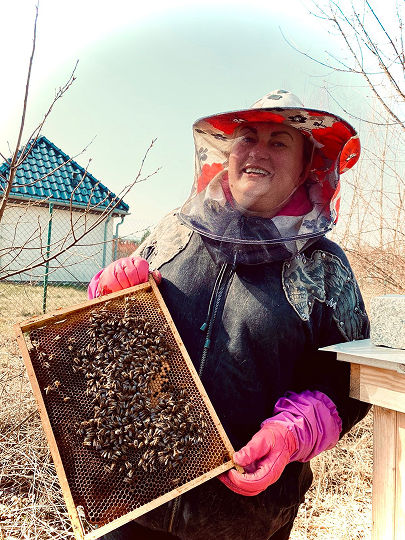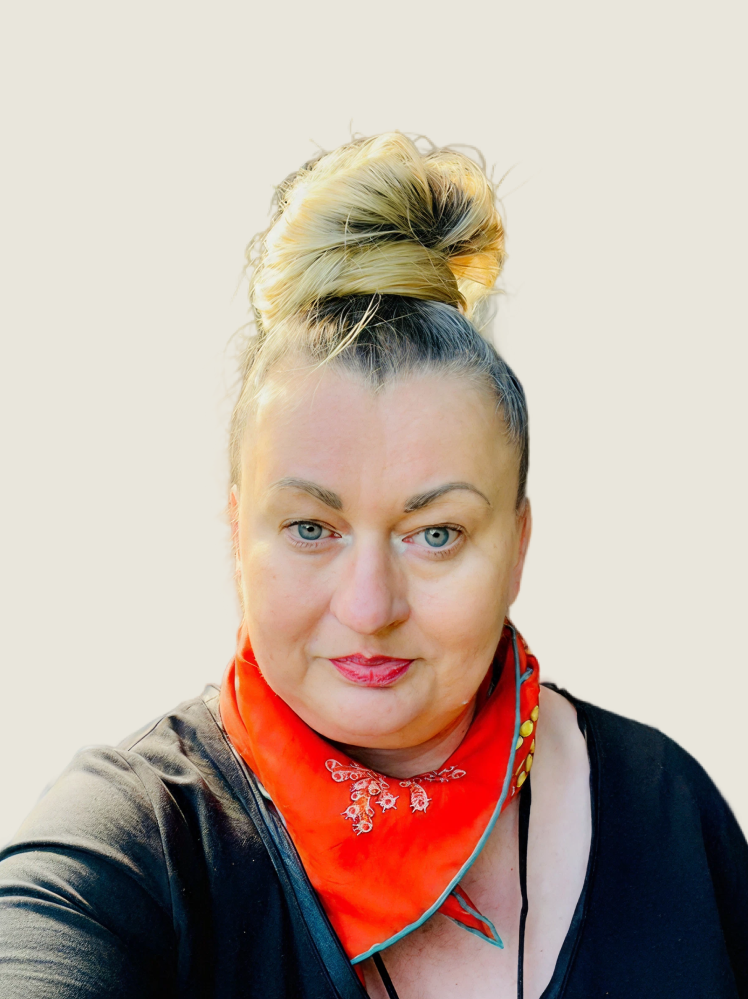

Magdalena Radke is transforming her 1.5-hectare Mokosz Farm into a women-led regenerative hub. Like a beehive in motion, her work is a choreography of relationships between sciences, farmers, and community to regenerate landscapes. Combining ecological beekeeping with functional foods, she is passionate about how women can lead regeneration in rural areas.
Connect with this farmer
Farm facts
Farm located in
Poland

Hectares
2
Time invested
6-10 years
Team size
1-5
Crops
Herbs/ Spices/ Medicinal Plants, Flowers
Animals
Bees
Distribution channels
Direct to retailer, Direct to restaurants, Farmers markets, Farm shop / On-farm sales, Cooperatives
Practices
Agroforestry/ Reforestation/ Rewilding, Composting, Rotational crop management, Others
Certifications
None
Regenerative Journey
Free of chemical/ synthetic inputs
Revenue streams
The Gene of a Beekeeper
For Magdalena Radke, becoming a beekeeper and farmer was less a decision than a return to something deeply rooted in her bloodline. Her grandmother, Albertyna, carried bees from Vilnius to Lower Silesia in cow wagons after World War II, a story of resilience that inspired Magdalena to honor her legacy through Mokosz Farm, where she now stewards 90 hives in Lower Silesia, Poland. As she says, “The gene of a beekeeper or farmer is inherited. You can’t remove it from your blood.”
Magdalena’s path into regeneration began with a personal desire for self-sufficiency, health, and a life closer to the land. Through studying regenerative farming, soil health, and ecological systems, she came to see regeneration not simply as an agricultural method, but as a way of rebuilding relationships between land, people, and community.
Today, Mokosz Farm is in an active phase of transformation and expansion, developing into a women-led model of rural regeneration where ecological beekeeping, biodiversity, scientific collaboration, and local enterprise intersect to demonstrate how small farms can create impact far beyond their own boundaries.
The Triangle of Regeneration
As Magdalena and her husband began relocating and developing their new farm base in Jawiszów, they encountered a depleted ecosystem. The soil was compacted, biodiversity was low, pollinators were scarce, and the vegetation was dominated by monotonous grass. “It felt like a blank page,” Magdalena recalls.
Coming from a beekeeping lineage, the first step felt obvious: bring back the bees. Establishing ecological hives transformed not only her relationship with the land, but the land itself. As pollinators returned, Magdalena began rebuilding biodiversity through flowering herbs, shrubs, and multi-species planting designed to support soil life, beneficial insects, and ecosystem health.
Alongside her hives, she now grows herbs and moves colonies with seasonal blooms, producing six to seven varieties of honey each year while supporting regional biodiversity. “We watch the bees naturally living,” she explains. “We do not interfere. Only observe and research how we can keep them in their own environment.”
But Magdalena’s vision always extended beyond farming itself. “I wanted this small piece of land to become a regenerative and innovation hub, a place where practices are demonstrated and then scaled to entire villages.”
This thinking evolved into what she calls the “triangle of regeneration”: connecting agriculture, academia, and local communities through shared knowledge and collaboration. That philosophy now shapes everything at Mokosz Farm from partnerships with universities and researchers to a community-based food network in Wrocław connecting local producers directly with urban consumers.
Seeding A Movement
Before transitioning into farming, Magdalena spent years as an entrepreneur, leading companies and building ventures. “Looking back now, I can see how every experience was preparing me for this transition,” she reflects. Today, she considers that business background one of her strongest assets in rural regeneration, allowing her to design projects, build partnerships, navigate funding, and lead multidisciplinary teams.
As a certified herbalist, mushroom expert, and food safety auditor, Magdalena is gradually developing Mokosz Farm into a regenerative food processing and biodiversity-focused rural enterprise producing herbal teas, ferments, preserves, and other functional products for health-conscious markets. Her work increasingly integrates ecological farming with ethnobotany, seasonal living, and the cultural concept of the Wheel of the Year as a framework for reconnecting people with natural cycles, medicinal plants, and community wellbeing.
Her entrepreneurial mindset is evident in the collaborations and innovations emerging around the farm. Most recently, she partnered with the University of Life Sciences in Lublin to develop honey enriched with medicinal mushroom extracts—demonstrating how ecological beekeeping, scientific research, and product innovation can strengthen one another.
Women at the Forefront Rural Regeneration
Magdalena’s most personal mission is empowering rural women to participate in Europe’s regenerative transition. Through her initiative Women4Soil, she is bringing together rural women, farmers, schools, municipalities, and scientists to co-create regenerative actions that extend far beyond her small-scale farm currently being developed in the Kamienna Góra region.
She envisions Mokosz Farm as an evolving living classroom for community-led regeneration—a space where women can gain confidence, practical skills, and agency to become landscape stewards within their own communities. Each participating village is encouraged to gradually develop its own regenerative approach adapted to local soils, climate, biodiversity, and cultural identity. Combining community engagement, education, and scientific collaboration, the initiative aims to support practical actions such as pollinator habitats, biodiversity plantings, seasonal learning activities, and other locally rooted regenerative solutions that may later serve as replicable models for other rural communities.
For Magdalena, this work is deeply personal. “Entering regenerative farming was not just a career change for me,” she says. “It was a return to my lineage, my values, and the land itself. Through Top 50 Farmers, we can encourage and strengthen the visibility of women-led regenerative projects at both national and European levels.”
Just as her grandmother once carried bees across borders in search of a new beginning, Magdalena now seeks to carry that legacy forward by building systems of regeneration designed to ripple far beyond a single farm. Like a healthy hive, she believes lasting transformation depends on collective care, shared responsibility, and every individual contributing to the resilience of the wider ecosystem.
“Even the smallest piece of land, tended with intention, can become a seed of transformation,” she says.
Written by Top 50 Farmers and Migle Labeikyte
Their story
The farm